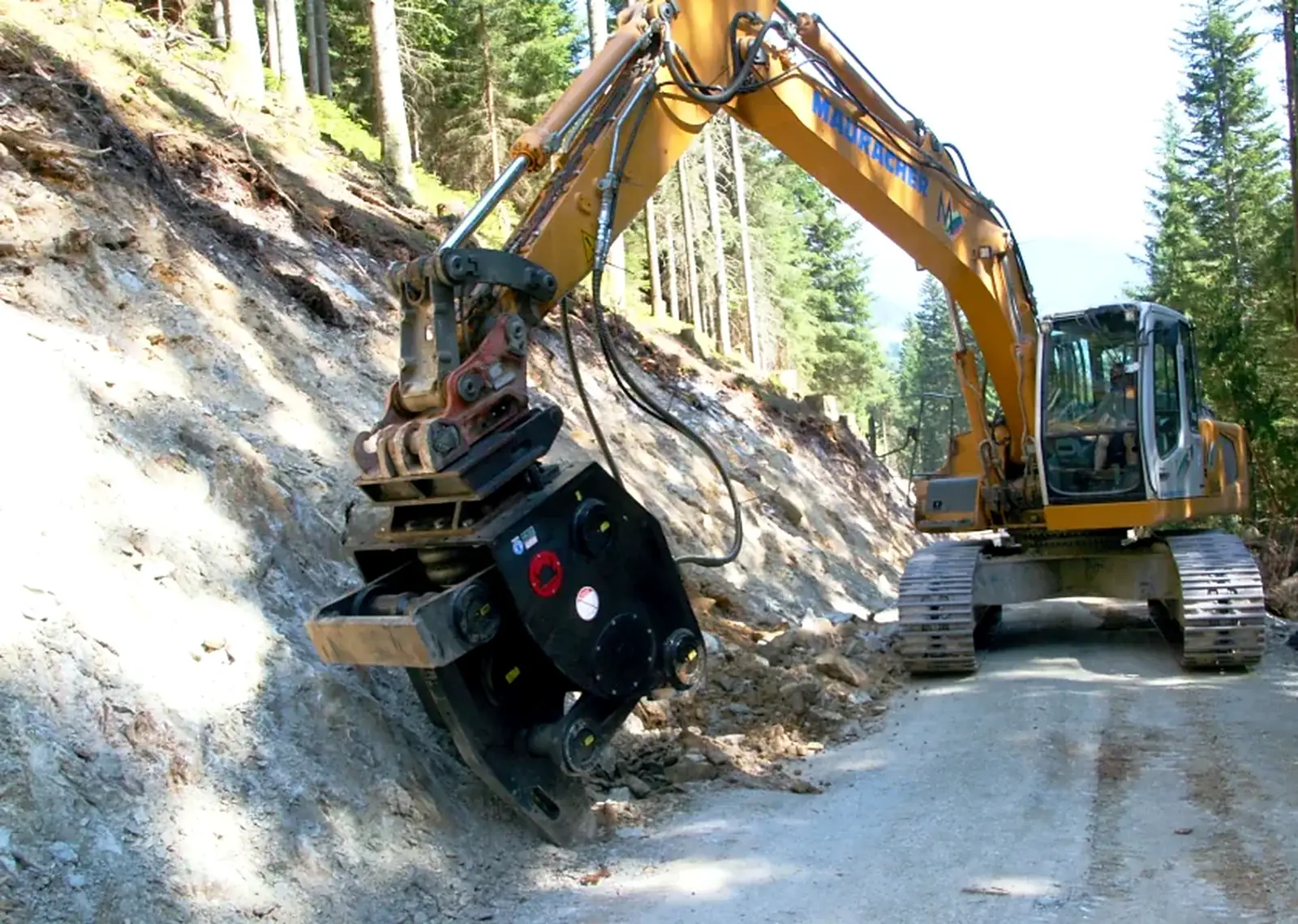
Bucket teeth

Bucket teeth

We supply bucket teeth for excavators and loaders together with adapters and locking parts — matched to the particular machine and to the ground it works in.

A tooth is a wear part and that is exactly its job: it works instead of the bucket edge and wears out in its place. Replacing a set of teeth costs a fraction of rebuilding or replacing the edge itself, which is why it pays to change them before they are worn away completely.

Signs that it is time: the tooth has visibly shortened and rounded off, digging is slower at the same machine settings, fuel consumption rises, and the bucket starts to skid over the ground instead of penetrating it. Working with fully worn teeth transfers the abrasion to the adapter and the bucket edge — parts that are far more expensive to replace.

Selection is governed first by the tooth system and the size of the machine, and only then by the tooth shape suited to the ground. Give us the make and model of the machine and send a photograph of the current tooth together with its adapter — we will work out what you need.

What we supply

  • Teeth for excavator and loader buckets
  • Teeth for grabs and demolition pulverizers
  • Ripper teeth
  • Flat and bolt-on teeth
  • Adapters, holders and flanges
  • Locking parts — pins, keys and retainers
  • Side shrouds, side cutting edges and blades
  • Abrasion protection — chocky bars and carbide buttons
Bucket teeth

Not sure which system you have?

Send a photograph of the tooth together with its adapter — we will identify the system and put a set together.

Before you call

Tooth systems — which one is on your machine

A tooth is matched not to the make of the excavator but to the system seated on the bucket edge. Below are the groups we meet most often. If you do not know which one you have, a photograph of the tooth with its adapter is enough.

01

Machine manufacturers' systems

Found on: machines still fitted with their original bucket

Caterpillar (J series), Liebherr, Komatsu, Hyundai and Lehnhoff. Teeth and adapters are replaced within one and the same system — mixing parts from different manufacturers ends in play and rapid wear of the seat.

02

Universal systems

Found on: custom-built buckets and those with a replaced edge

Esco (V and Ultralok), Bofors (B-Lock and Torpedo), Italricambi (FN/BT), C-Lock and UniZ. These are independent of the machine make and are most often found on buckets built or rebuilt by workshops.

03

Bucket edge protection

Found on: highly abrasive ground and work in rubble

Side shrouds, side cutting edges, chocky bars and welded carbide buttons. Their job is to take the abrasion before it reaches the bucket edge itself — the most expensive part of the whole assembly.

Before you call

What is worth having ready

The more of this you can give us straight away, the sooner you get a specific answer instead of a general one.

  1. 01Make, model and operating weight of the machine
  2. 02The tooth system, if you know it
  3. 03A photograph of the current tooth together with its adapter
  4. 04Bucket width and the number of teeth
  5. 05Ground type — soil, gravel, rubble, rock
Frequent questions

Questions and answers

How do I know the teeth need replacing?
By the shortened and rounded point, slower digging at the same machine settings, and higher fuel consumption. If a tooth wears away completely the abrasion moves to the adapter and the bucket edge, and that is a far more expensive repair.
Can you match teeth without a part number?
Yes. The make and model of the machine plus a photograph of the current tooth with its adapter are enough — from that we establish the system and the size. A part number speeds things up but is not required.
Does every tooth fit every bucket?
No. Teeth seat into adapters, and the systems differ between manufacturers and machine sizes — Caterpillar J is one thing, Esco Ultralok or Bofors B-Lock quite another. That is why we always start by establishing the system, not the shape of the tooth. Do not mix parts from different systems either: the result is play and rapid destruction of the adapter seat.
Are shrouds and chocky bars worth fitting?
In highly abrasive ground and when working in rubble — yes. Side shrouds, chocky bars and welded carbide buttons take the abrasion before it reaches the bucket edge. Replacing that protection costs a fraction of rebuilding the edge itself.
Which tooth shape should I choose?
It depends on the ground. Soil and gravel take general-purpose teeth; dense material and rock take narrower, penetrating teeth with a reinforced section. Tell us what the machine works in and we will advise.